
Before anything else, I honor the memory of all those who gave their lives for the freedom of this land;
the memory of those who, for as long as I live, will flow through the veins of my life.
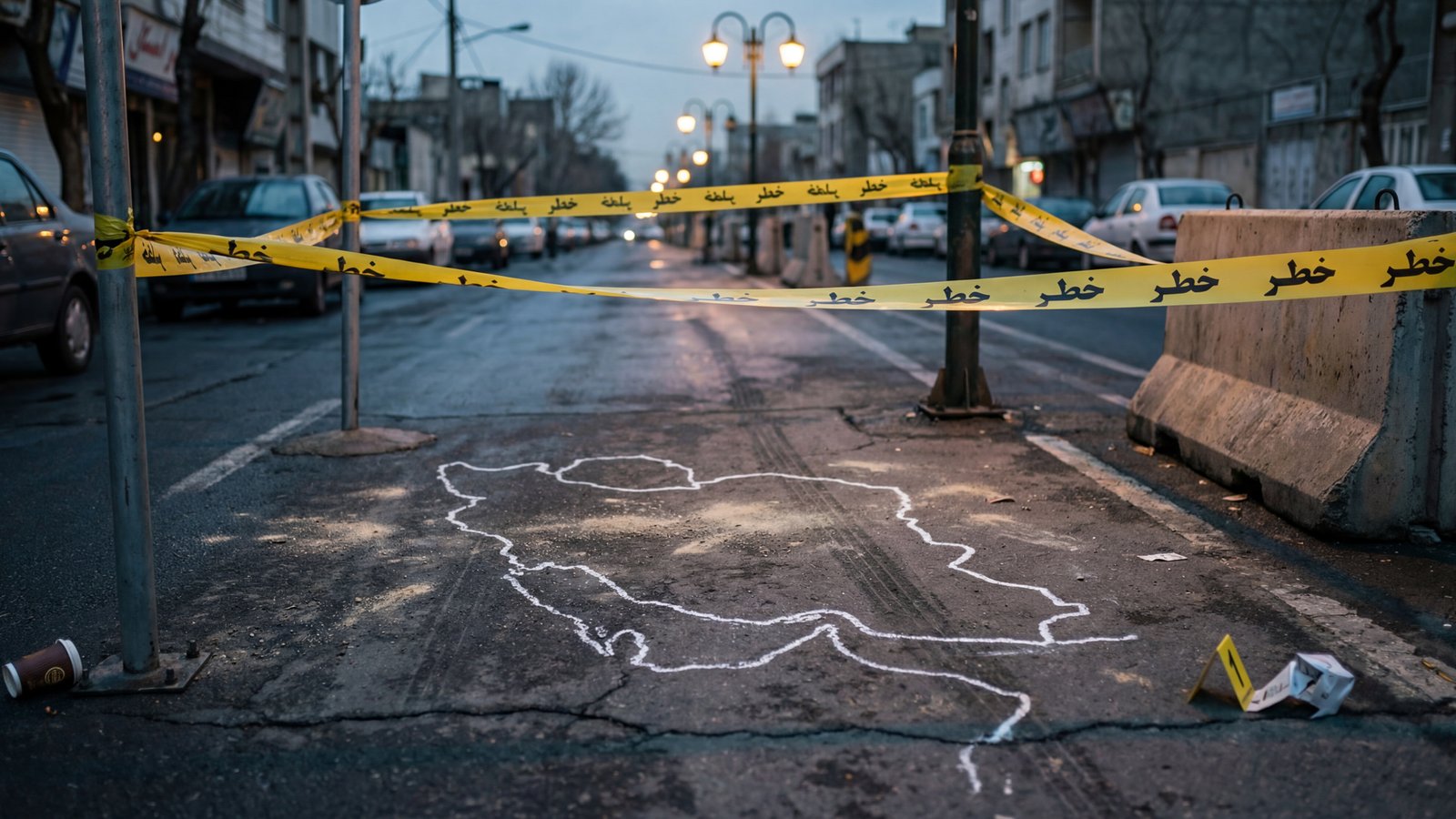
Fall of the “Home” Concept: Iran as a Crime Scene, Not a Political Unit
(Re‑reading Sovereignty through Just War Theory)
1. From “Cartel” to Parasitic Oligarchy/Colony
In the past I have used the term “cartel” to describe the structure that rules over Iran: a network that devours resources and writes the rules of the game for itself. But if we want to speak more precisely – and more ruthlessly – what is established in Iran today looks less like a state and more like a parasitic oligarchy or colony: a cluster of institutions, circles and armed layers that, instead of co‑existing with society, have mounted themselves on top of it and turned the country into their feeding ground.
Throughout this text I deliberately use the phrases “Islamic regime in Iran” and “the ruler in Iran”, not “the Iranian state.” This is not a minor wording choice. At the conceptual level it determines what we are dealing with: is it a “state” embedded in a political contract that, at least in principle, can be reformed from within? Or is it a parasitic structure whose logic is not “running the home” but consuming it?
As long as we keep calling this structure “the state,” we automatically slide into an ethical frame in which any external pressure is interpreted as an “attack on the home.” In that frame, people and ruler stand on one side of the line and “outsiders” on the other. But if we show that, in practice, the “home” has been turned into a crime scene, and that the ruler in Iran looks less like a representative of the residents and more like the group managing that scene, then moral debates on war, sanctions and intervention inevitably take on a very different shape.
The picture is simple. On paper, the title deed of a building is still in the name of a family that once owned it. In reality, for years an armed gang has occupied it floor by floor, forced the original residents into silence, and even put the water and electricity bills in the names of the hostages themselves. From the outside, everyone still calls it “the So‑and‑so house.” From the inside, the building has effectively become the operations center of a crime. Under the domination of the Islamic regime, Iran is experiencing something very close to this condition.
2. Sovereignty as Contract, Not Sacredness
The starting point of the argument is how we define sovereignty. In the official narrative of many governments, sovereignty is a “sacred,” unconditional right – a shield that allows them to do whatever they wish behind their borders and to dismiss any external criticism as “interference in internal affairs.” From the standpoint of moral reflection on war and peace, sovereignty is not sanctified so easily.
In this reading, sovereignty is a two‑sided contract between a political community and the structure that governs it. People hand over their right to self‑organization, self‑defence and the legitimate use of force to a structure called the state. In return, that structure undertakes to:
- protect their lives against internal and external violence;
- uphold at least a minimal set of political and civil freedoms; and
- provide a framework within which shared life is reasonably predictable.
As long as this contract – however incomplete and dysfunctional – holds at some basic level, sovereignty enjoys strong moral protection. Borders are worthy of respect, and external interference, except in exceptional cases, counts as aggression.
But what if the ruling side itself becomes the primary source of threat to the lives and freedoms of its citizens? What if prisons, torture, systematic killing, plunder of resources and the destruction of every legal avenue for change are not occasional deviations but the very operating code of the system? In that case, the reality is that the ruler has repudiated the contract. In such a condition, he is no longer the “representative of the community”; he looks much more like one of the perpetrators of the crime who speaks in the community’s name.
With regard to the Islamic regime in Iran, the key question is this: can we seriously claim that this structure today represents a living political community – or does it rather stand for a web of interests that has taken Iran hostage? The answer is not merely theoretical. It determines how much moral respect “sovereignty” deserves in this context, and how far we can close our eyes to atrocity in its name.
3. Iran: Shared Home or Occupied Network?
The classic image of the homeland is the image of a shared home. In that picture, citizens and the state both see themselves as inhabitants of the same building, even if their relationship is deeply strained. In a shared home:
- there is conflict, but the basic frame is still common;
- the government, even when corrupt, still sees itself, to some extent, as the manager of “us”; and
- people, even when discontented, can still imagine some form of internal change – through elections, civil pressure or elite rotation.
Iran under the Islamic regime has been moving steadily away from this picture. In practice, the ruler in Iran relates to the home in the following way:
Key centres of power lie not in the formal government but in parallel, supra‑legal institutions;
a structure of military and paramilitary forces, bound by ideological loyalty, holds effective oversight over everything;
strategic sectors of the economy are controlled by foundations and bodies exempt from public transparency and accountability; and
any legal mechanism that could lead to real change is either neutralized in advance or crushed at the critical moment.
Within this architecture, the “home” is transformed into a patchwork of occupied zones:
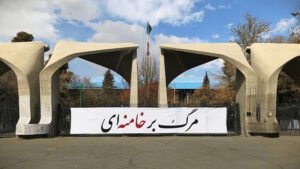
Universities that should be sites of knowledge and open debate are kept under constant security supervision;
media that should be the eyes of society are turned into instruments for propaganda and justification;
elections that should be mechanisms for rotating power are reduced to periodic rituals for re‑endorsing the same hard core of the system.
In such a house, the citizen no longer holds a meaningful share; they become a conditional guest. Their right to remain is tied to how they behave toward the building’s “current owners”: if they stay quiet and join the compliant crowd at critical moments, they are allowed to live in some corner of the structure; if they try to challenge the rules, in the best case they are expelled, and in the worst case, eliminated.
So when we speak of “Iranian sovereignty,” we must ask clearly: do we mean the sovereignty of the Iranian political community over its own territory, or the sovereignty of a network of occupiers over that community and that land?
4. From Political Unit to Crime Scene
Here we reach the main turning point. We usually view countries as political units: clusters of institutions and populations living under a single flag within defined borders. At this level, differences are encoded within a shared template: corrupt states, democratic states, authoritarian states, developed or developing states.
That template, however, hides another dimension: a country can, from within, turn into a crime scene in progress. In such a situation:
killing, torture and disappearances are not exceptions but systematic tools of governance;
the law becomes a mask for crime; official documents become instruments of confiscation and repression; and
institutions, instead of reducing violence, organize it.
The difference between being a “political unit” and being a “crime scene” is not merely a matter of how intense the violence is; it lies in the direction of the structure. In a political unit – even a very flawed one – the law is at least formally defined against crime, and perpetrators must hide. In a crime scene, law and structure are themselves part of the problem; perpetrators have no need to hide, because they wear official uniforms.
The argument of this essay is that Iran is increasingly sliding from the first category into the second. When:
killing protesters in the streets, without genuine accountability, becomes “routine”;
imprisonment, torture and forced confessions are not the mistakes of rogue agents but standard instruments of crisis management; and
the international community, out of habit, continues to sit across from “the Iranian government” as if it were just another political unit;
then we are not dealing with a house where an argument has broken out. We are dealing with a building in which the management itself belongs in the dock.
5. A “Security” That Is the Most Unsafe Condition
One of the Islamic regime’s most effective weapons is its narrative of “security.” The ruler constantly talks about “stability,” “calm,” “preventing a Syrian scenario,” “preserving territorial integrity,” and “saying no to civil war.” Parts of society – especially those who have directly witnessed war and collapse in the region – are understandably sensitive to this message.
But we have to ask ourselves honestly: security for whom, and against what?
If security is reduced to “no foreign tanks in the streets,” then yes, for now there are none.
But if security means the ability to live with a minimum of dignity, to express dissent, to plan for the future, and to feel that tomorrow might be slightly better than today, then the situation is far more insecure than the official story suggests.
In the building we imagined at the start, everything might look quiet from outside. A neighbour on the next block says: “At least there’s no gunfight between gangs here; the building is quiet – that’s something to be thankful for.” But the reason for this quiet is that the hostage‑taker is holding a gun to everyone’s head and has said: “If I hear the slightest noise, I pull the trigger.” Silence in that situation is not a sign of safety; it is a sign of being held hostage.
The kind of “security” the Islamic regime boasts about is of the same kind. This “stability”:
has not stopped the massive emigration of creative generations;
has not reduced addiction, family breakdown or psychological exhaustion;
has not contained structural corruption – it has deepened it; and
above all, responds to any serious protest with a level of violence that itself can spark much larger instabilities.
In the long run, persisting in this surface‑level stability is more dangerous than many shocks would be, because it keeps society in a state of slow death: it neither allows it to die and restart, nor allows it to truly live.
6. Intervention: Aggression or International Policing?
So far, the focus has been on diagnosing the situation. We now reach a more sensitive edge: if we see Iran not as a “protected home” but as a crime scene, what place, if any, does external intervention have?
In official language, every form of external pressure – from sanctions to military action – is immediately equated with “aggression.” This equation rests on the image of Iran as a shared home and the Islamic regime as the rightful custodian of that home. If we accept that image, any crossing of the border is morally suspect from the outset.
But if we accept that sovereignty is a contract, and that, at a fundamental level, the ruler in Iran has violated this contract, then we can no longer automatically label every form of intervention as “aggression.” In certain situations, one can speak of a form of international policing: interference not to seize the home, but to stop a crime in progress.
Here, several crucial distinctions have to be drawn:
Imperialist intervention, whose aim is to expand influence, capture resources or reshape the geopolitical order in favour of a power;
versus
Intervention benchmarked by the protection of a suffocating political community, with:
limited aims (stopping atrocities, not grand social engineering);
clearly constrained timing and scope;
maximum attention to the will and participation of meaningful segments of the domestic society; and
designs in which the restoration of power to the people is the ultimate goal.
This essay does not set out to prescribe a specific formula for intervention in Iran. Its task lies one step earlier: to show that absolute non‑intervention, in a situation where the home has become a crime scene, is itself a moral stance – and can amount to a form of passive complicity in ongoing atrocities.
In criminal cases, a police officer who knowingly ignores a crime and pretends not to hear is not simply “neutral”; on one level, he is an accomplice. In global politics, when a society is being crushed under a parasitic oligarchy, endlessly chanting “unconditional respect for sovereignty” can serve as the ethical cover for keeping the same situation in place.
7. Naming as the First Intervention
As the first piece in this series, this essay is not meant to issue executive orders; its role is to rewrite the minutes of reality. As long as the official report reads “a household dispute inside a private home,” the police cannot cross the threshold. Once the report is changed to “an ongoing crime scene,” everything has to be reconsidered.
Insisting on terms like parasitic oligarchy and colony, and on phrases such as “Islamic regime in Iran” and “ruler in Iran” instead of “Iranian state,” is part of that act. These names remind us that the true owner of the home is the Iranian political community, not the structure that currently speaks in its name while acting against its interests.
The ending of this essay is, at the same time, the starting point of the next ones:
If we still see Iran simply as a “home,” then any discussion of hard confrontation, external pressure or intervention will be understood within the moral logic of violating private space.
If, however, we see it as a fallen home that has become a crime scene, the questions change:
What kind of shock could actually halt this process?
Where can we draw clear lines between legitimate intervention and imperial meddling?
And what role should the Iranian society itself play in designing and executing any path to liberation?
The remaining essays tackle these questions: moving from conceptual diagnosis to the logic of confrontation (Schmitt/Mearsheimer) and the ethics of intervention and “pulling the trigger” (Hitchens), and exploring how to draw a practical line between “violence for violence’s sake” and necessary force to stop a larger crime.
Conceptual Sources of the “Darkroom of Power” Project
-
Michael Walzer,
Just and Unjust Wars: A Moral Argument with Historical Illustrations, Basic Books.
Focus of use: sovereignty as a two‑way contract, the idea of the “crime scene,” and the moral legitimacy of intervention to stop an ongoing atrocity. -
Carl Schmitt,
The Concept of the Political, University of Chicago Press.
Focus of use: defining politics as the friend/enemy distinction, the notion of the existential enemy, and the zero‑one logic of confrontation. -
Gustave Le Bon,
The Crowd: A Study of the Popular Mind.
Focus of use: crowd psychology, analytical paralysis, and the role of fear and tradition in engineering collective passivity. -
Viktor E. Frankl,
Man’s Search for Meaning.
Focus of use: survival mechanisms under extreme conditions, habituation to suffering, and linking these mechanisms to a nationwide “survival syndrome.” -
John J. Mearsheimer,
The Tragedy of Great Power Politics, W. W. Norton & Company.
Focus of use: logic of survival in an anarchic environment, the need to redistribute hard power to change the balance, and translating this to the society/regime level. -
Christopher Hitchens,
Letters to a Young Contrarian.
Focus of use: critique of passive pacifism, defence of confronting fascism and dictatorship, and the idea of the “cost of postponing liberation.” -
Christopher R. Browning,
Ordinary Men: Reserve Police Battalion 101 and the Final Solution in Poland.
Focus of use: normalisation of violence, the role of “ordinary” individuals in crime‑driven systems, and the link to the “soft gas chamber” metaphor. -
Gary J. Bass,
Freedom’s Battle: The Origins of Humanitarian Intervention.
Focus of use: history of humanitarian interventions, the tension between sovereignty and protection of victims, and the background for “international policing.” -
Susan Sontag,
Regarding the Pain of Others.
Focus of use: representation of suffering, images of war and violence in media, and the image/reality gap when narrating the crime scene. -
Henry Kissinger,
World Order: Reflections on the Character of Nations and the Course of History.
Focus of use: the logic of order and stability in international politics, and the tension between “order” and “justice” when a criminal regime is part of the existing order. -
James Baldwin,
The Fire Next Time.
Focus of use: manifesto‑style language, witnessing catastrophe from within through a global theoretical lens, and inspiration for the “observer–surgeon” voice.
Fall of the “Home” Concept: Iran as a Crime Scene, Not a Political Unit
No Comments